



Most of us look to our mattresses as our safe haven, but sometimes what’s comfortable isn’t actually good for you.
Traditional mattresses, like spring beds, are made of metal and gaseous chemicals like volatile organic compounds (VOCs), which usually come from materials like the bed’s flame retardant properties. Unfortunately, chemicals like VOCs can be dangerous to your family’s health.
“It is important to understand that air quality in our sleeping micro-environment is important with regard to our exposure to various pollutants such as VOCs,” says researcher Yael Dubowski. “Hence, we should make an effort to improve it.”
Because of the dangers, more and more people are starting to move away from the traditional spring mattress and are opting for mattress alternatives, like latex mattresses and memory foam beds. These beds are generally of higher quality and have safer materials—but what exactly is the difference, and how do you know which one is right for you?
Latex Mattresses vs Memory Foam Mattresses
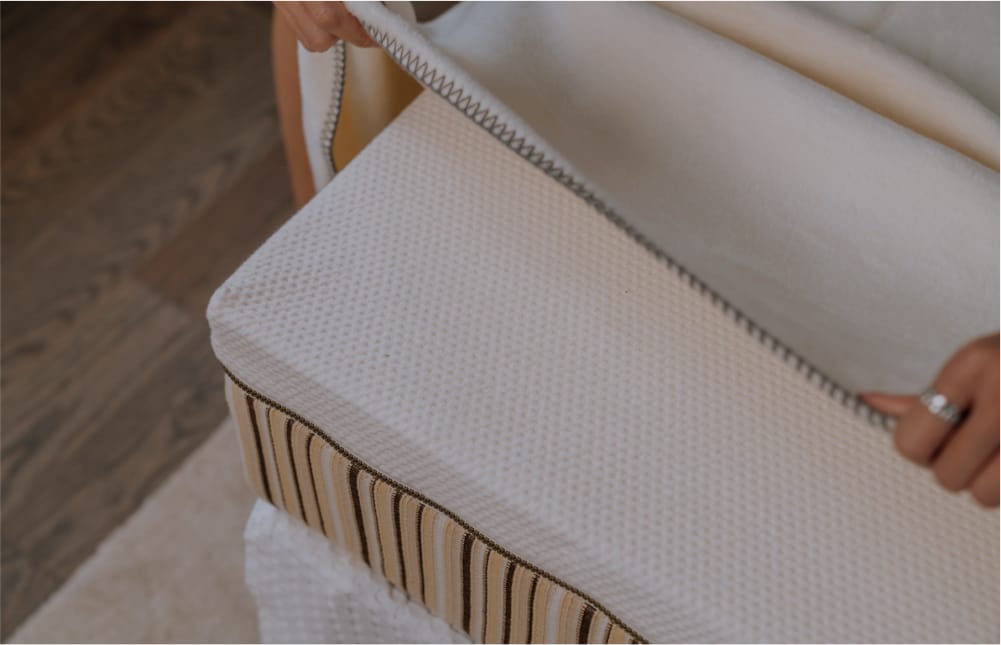
At first glance, latex and memory foam beds look somewhat similar: Both are soft to the touch and are made up of an airy-like material that emulates the look and feel of sleeping on a cloud.

The material you’re looking at is foam. A latex mattress and memory foam bed have a particular type of foam that offer additional support as you sleep. Before you get into which bed is right for you, first take a look at memory foam and latex mattresses so you can break down the exact differences.
Origin
Latex
Latex is derived from the milk or sap of rubber trees called Hevea brasiliensis, which are trees that are typically found in rainforests throughout South America. Its milky latex is the main source of many common materials made out of rubber, like gloves, catheters, balloons, hoses, and mattresses.
Although rubber trees have been around for hundreds of years, it wasn’t until the 1920s when a scientist turned its milk into foam. Nearly 100 years ago, British chemist Edward Murphy invented the first latex mattress. At the time, he was working for the industrial company Dunlop, which primarily manufactured rubber goods and was also one of the first to develop car tires. While working with Dunlop, Murphy developed and patented the first rubber foam.
Memory Foam
Memory foam was developed by NASA in the 1970s when officials asked a group of engineers to create a unique, customized seat for their astronauts. This seat had to be a brand-new invention and relieve pressure from the massive gravitational forces that astronauts experienced during takeoff and landing. However, researchers were stumped: Since astronauts’ bodies changed over time, a custom seat would need to be made for every trip, which was impossible.
Eventually, aeronautical engineer Charles Yost developed a human-made material called “viscoelastic,” a type of polyurethane foam that is known better today as memory foam. This type of foam could comfortably and slowly contort and support each astronaut’s body and then reform its original shape with ease, making takeoffs and landings easier on their bodies. The comfort of memory foam was such a grand discovery that it was quickly developed and sold all over the country.
Materials
Latex
Latex is made from a rubber tree’s sap or milk that goes through either the Dunlop or Talalay process to create the foam-like materials. It is an entirely natural plant product, so it’s often praised for its organic properties. Although it varies on where you purchase from, many brands like Essentia offer hypoallergenic latex mattresses.
Latex foam comes in three types: Natural latex, synthetic latex, and blended latex varieties. Natural latex is 100% hypoallergenic when made from entirely natural resources like rubber trees. Synthetic latex, however, is made in-lab to mimic the look and feel of its natural counterpart. Blended varieties have a mixture of both natural and synthetic properties.
Furthermore, latex foam can be made from one of two processes: Talalay or Dunlop. Talalay latex results in a softer-feeling foam. Most Talalay latex on today’s market is heavily blended and most likely 100% synthetic. Dunlop latex creates a more firm-feeling foam and can be created naturally or synthetically.
Memory Foam
Memory foam is a human-made material, which means that it doesn’t have a “natural” version. Instead, it is constructed with polyurethane and other materials that help create the specific viscoelastic properties.
Memory foam has been criticized in the past for its dangerous toxins, like formaldehyde, benzene, naphthalene, and isocyanates, which can irritate the nose, eyes, and throat. However, many mattress brands, like Essentia, are moving in an organic direction so that people can still enjoy the comfort of memory foam without experiencing sleep irritants.
Support
Latex
Latex has more elasticity and a tighter hug than memory foam, which means that its response time is faster, so it has more bounce and a lighter feel. Despite its extra bounce, latex can also offer excellent pressure relief for those suffering from unwanted aches and pains in their back, neck, and joints, making it perfect for side sleepers or stomach sleepers.
Memory Foam
Memory foam is known for its pressure relief and motion isolation. It molds to body shapes, which can help relieve pressure points that build up over time. Because of its slow response time, memory foam also doesn’t snap back as quickly as latex, and is excellent for sleepers of any position.
Which is Better: Latex or Memory Foam Mattress?
Both memory foam and latex mattresses have their own sets of pros and cons, which is why it’s a good idea to always do your research before buying.

Here are some of the major benefits that a natural latex mattress and memory foam mattress have to offer.
Beyond Latex Foam Mattress
Latex Mattress Benefit #1: They’re Hypoallergenic
Nearly all other mattress types utilize adhesives and petroleum-based foams that continue to release toxic chemicals into the air as they age. Latex mattresses naturally repel mold, mites, and mildew. Plus, they don’t exude any odors, smells, or toxins, making them some of the safest sleeping materials in the world. However, because of this, they’re sometimes hard to come by.
Latex Mattress Benefit #2: They Can Provide Improved Spinal Alignment
Because of their ability to push back, latex mattresses are similar to memory foam beds because they can morph to the shape of your body. This feature offers natural spine alignment and pressure relief from back and joint pains, making it perfect for any type of sleeper.
Latex Mattress Benefit #3: They’re Long-Lasting and Durable
A latex mattress outlasts other mattresses by years. A natural latex mattress can last up to 15 years, whereas synthetic or blended latex mattresses can last up to 10. These beds are durable and don’t get worn down as quickly, so it’s safe to say that they’re a commitment worth investing in.
Memory Foam Mattresses
Memory Foam Benefit #1: They Can Provide Pain Relief
Since memory foam was initially developed to support the weight against joints, it makes sense that these beds are leading products for pain relief. Memory foam morphs and contours to the shape of your body, which means that they offer neutral spinal alignment, which improves neck and back pain. Memory foam helps evenly distribute weight to correct your sleeping posture, which can even ease your breathing as you sleep.
Memory Foam Benefit #2: They Offer Proper Weight Redistribution
Thanks to its flexible cell structure, memory foam doesn’t push against your body but instead works with your body’s shape so it can evenly distribute weight. A good rule of thumb for when you’re shopping for a memory foam bed is to check the density rating. The density rating tells you how much weight and support it can offer you while you sleep.
Make sure that the bed has a rating of at least 3.5 to 4 lbs./ft³ density. A bed with a higher density is of higher quality, which means that it can offer more support for your and your sleeping partner’s body.
Memory Foam Benefit #3: They’re Motion-Transfer Resistant
Whether you love to toss and turn throughout your sleep or have a restless partner, memory foam mattresses are great for light and restless sleepers alike because of their motion-transfer resistance. With no squeaks or creaks, the memory foam material minimizes movement altogether so that your sleep remains uninterrupted all night long.
Conclusion
Nearly a third of your life is spent sleeping—so it’s probably safe to say that you want that precious time spent on a comfortable mattress.

